


 by
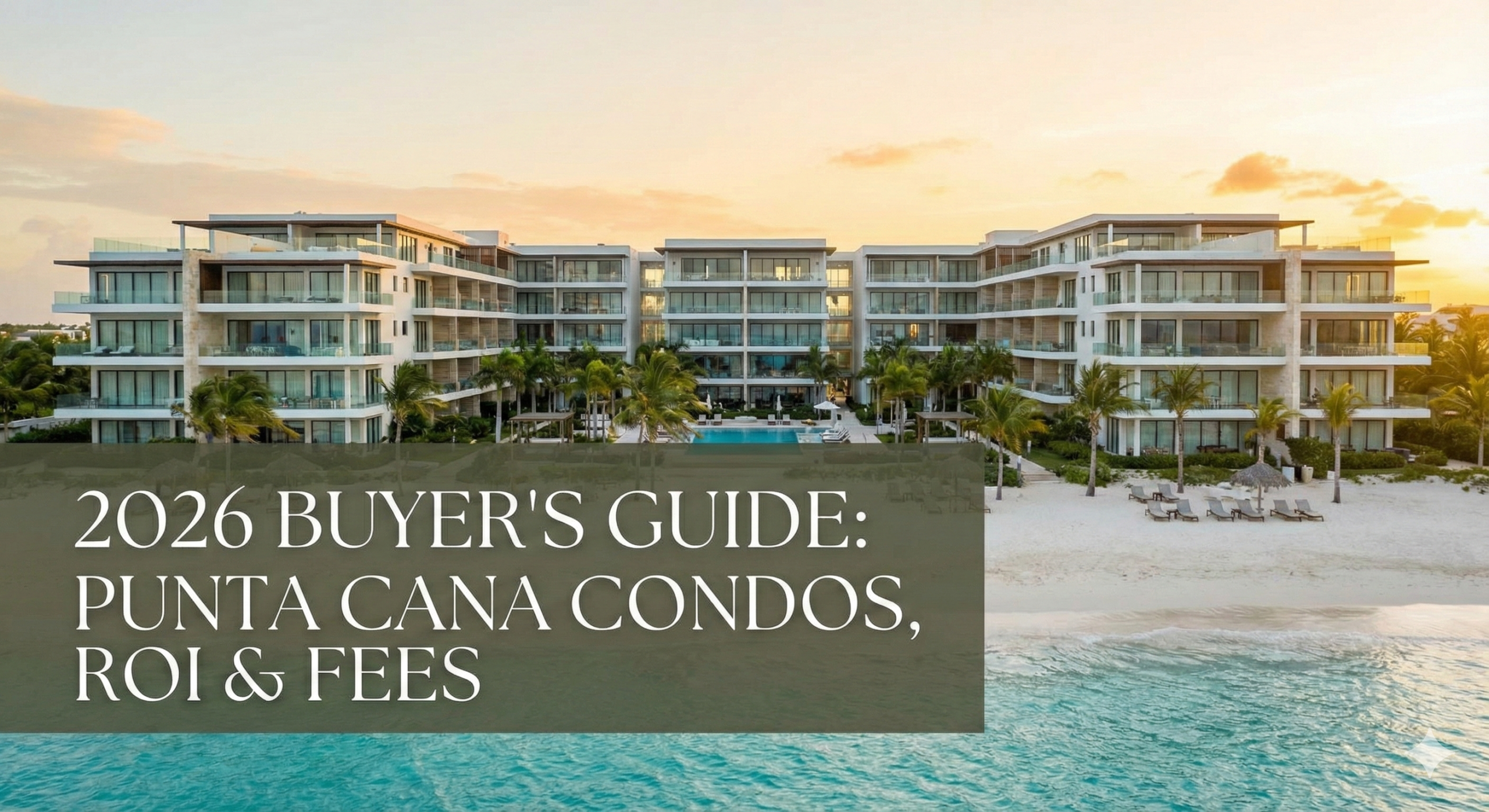
As the Dominican Republic’s tourism sector reaches record-breaking heights, a Punta Cana condo investment has become the primary choice for North American investors seeking high rental yields and tax incentives. This guide provides a data-driven look at how to maximize your Punta Cana condo investment by modeling real ROI, understanding complex fee structures, and navigating the 2026 market with confidence.
The 2026 Real Estate Outlook: Why Punta Cana Remains a Top Caribbean Market
In 2025, the Punta Cana–Bávaro corridor welcomed a record 5.7 million airline passengers—up 11% year-over-yeaPunta Cana’s investment fundamentals continue to be supported by expanding connectivity and sustained tourism momentum—two drivers that typically strengthen short-term rental demand and resale liquidity for well-located condos.
Verified airport demand signal (PUJ): In an official year-end update, Punta Cana International Airport (PUJ)reported that it moved more than 11 million passengers in 2025 (+9.9% vs. 2024) and reached 35,092 flights (+15.6% vs. 2024). PUJ also reported December 2025 passenger flow increased 11.5% year-over-year, rising from 975,450 (Dec 2024) to 1,087,621 (Dec 2025), alongside consecutive weekly flight records reaching 900 weekly flights during peak season.
Source: Punta Cana International Airport (PUJ) — official news release
Global tourism momentum signal (FITUR 2026): At FITUR 2026 (one of the sector’s key global gatherings), the organizer IFEMA MADRID reported more than 255,000 attendees, participation from more than 10,000 companies, and representation from 161 countries—evidence of sustained international demand and ongoing industry investment.
Source: IFEMA MADRID — FITUR 2026 official press release (25 Jan 2026)
Trend context (UN Tourism): UN Tourism describes FITUR 2026 as a key event for source and destination markets with a focus on sustainability, innovation, and digitalisation—themes that align with continued investment in destination infrastructure and tourism experiences.
Source: UN Tourism — FITUR 2026 event page
These conditions tend to support strong performance for condos in established areas—especially properties with proven rental appeal (beach access, amenities, and proximity to major attractions).
Neighborhood Selection for ROI (Vista Cana vs Cap Cana vs Downtown vs Los Corales)
Punta Cana condo ROI is neighborhood-specific. The same unit type (2BR/2BA, 1,200 sq ft, ocean view) can produce materially different net yields depending on location, guest profile, and operational friction. Use this framework to match your investment strategy to the right micro-market—without relying on generic “best neighborhood” claims.
Source: Market estimates from AirDNA and verified rental management reports from local agencies.
Vista Cana: High-amenity resort living with integrated rental infrastructure
Investor profile: STR-focused buyers who want turnkey operations and a captive guest base.
What drives ROI here:
- Integrated resort amenities (pools, beach club, restaurants, golf) create a “stay here” guest experience that supports higher ADR and repeat bookings.
- Many developments offer on-site rental management programs with front desk integration, reducing operational complexity for remote owners.
- Strong appeal to families and groups seeking a resort experience without all-inclusive constraints.
Fee structure considerations:
- HOA fees tend to be higher due to resort-level amenities and services.
- Confirm what’s included: beach club access, shuttle service, golf privileges, gym, coworking spaces.
- Verify STR rules: some phases have minimum night requirements or mandatory management.
Rental strategy fit:
- Best for: Short-term rental (3–7 night stays), especially during high season (Dec–Apr).
- Guest type: North American families, golfers, wellness travelers.
- Operational advantage: On-site support reduces owner workload; easier to scale multiple units.
For a deep dive into the Vista Cana market, including community layouts and buyer incentives, see our complete Vista Cana real estate guide.
Cap Cana: Ultra-luxury, marina lifestyle, and high-net-worth guest demand
Investor profile: Buyers targeting premium ADR with a luxury lifestyle brand.
What drives ROI here:
- Marina proximity and luxury positioning attract higher-spending guests (yachting, fine dining, private experiences).
- Properties near Playa Juanillo or the marina command some of the highest nightly rates in Punta Cana.
- Strong appeal for mid-term rentals (1–3 months) from digital nomads, executives, and seasonal residents willing to pay premium rates for quality and exclusivity.
Fee structure considerations:
- HOA fees reflect luxury-grade services (concierge, security, landscaping, marina access in some cases).
- Utilities can be higher due to larger unit sizes and guest expectations (A/C, hot water, premium finishes).
- Confirm STR policies: some buildings restrict short-term rentals or require guest registration/approval.
Rental strategy fit:
- Best for: Short-term luxury rentals (high ADR, lower volume) or mid-term executive stays.
- Guest type: High-net-worth travelers, yacht owners, luxury seekers, remote executives.
- Operational consideration: Premium positioning requires premium presentation (furnishings, photography, guest communication).
Cap Cana also offers strong villa inventory for lifestyle buyers and second-home investors. For investment-focused guidance on the Cap Cana market, read our Cap Cana real estate investing guide. If you’re interested in the marina lifestyle and amenities, explore Marina Cap Cana: Caribbean luxury in Punta Cana.
Downtown Punta Cana: Walkability, local flavor, and emerging STR demand
Investor profile: Value-focused buyers targeting a mix of tourist and local demand.
What drives ROI here:
- Walkable access to restaurants, shops, nightlife, and services—appeals to independent travelers and younger demographics.
- Lower entry price points (per square meter) compared to beachfront resort zones.
- Growing appeal for mid-term rentals (remote workers, extended stays) who want local immersion without resort pricing.
Fee structure considerations:
- HOA fees are typically lower than resort communities (fewer shared amenities).
- Utilities and internet are often owner-managed (not bundled), so model these as separate line items.
- Confirm building rules on STR: some downtown condos have flexible policies; others restrict or require permits.
Rental strategy fit:
- Best for: Budget-conscious STR guests, mid-term stays (1–6 months), or hybrid personal use + rental.
- Guest type: Independent travelers, digital nomads, couples, small groups seeking local experiences.
- Operational advantage: Lower fees can improve net yield, but you may need more hands-on management (or a local contact).
For a broader view of how Downtown fits into the Punta Cana investment landscape, see our article on the advantages of owning property in Downtown Punta Cana.
Los Corales (Bávaro): Beachfront accessibility, local vibe, and strong STR fundamentals
Investor profile: Buyers who want beach proximity + walkable local character without full resort pricing.
What drives ROI here:
- Direct beach access (Bávaro Beach, one of the most popular in Punta Cana) with a more relaxed, less resort-dominated feel.
- Strong appeal to European and North American travelers seeking authentic Caribbean beach life.
- Walkable to restaurants, beach bars, and local services—reduces guest reliance on taxis/shuttles.
Fee structure considerations:
- HOA fees vary widely depending on building age and amenities (some older buildings have lower fees but higher maintenance risk).
- Confirm beach access logistics: some buildings have direct access; others require a short walk.
- Verify STR rules and any guest registration requirements.
Rental strategy fit:
- Best for: Short-term beachfront rentals (3–10 nights), especially for couples and small families.
- Guest type: Beach-focused travelers, European tourists, North American snowbirds.
- Operational consideration: Proximity to the beach is the primary value driver—ensure your unit’s location and view support premium pricing.
For detailed insights into the Los Corales market and what to expect as a buyer or investor, read our guide on real estate in Los Corales, Punta Cana.
Quick ROI comparison framework (use this to decide)
| Neighborhood | Best rental strategy | Typical ADR range | HOA fee level | Guest profile | Operational complexity |
|---|---|---|---|---|---|
| Vista Cana | STR (resort experience) | Mid-to-high | High (resort amenities) | Families, golfers | Low (on-site support) |
| Cap Cana | STR luxury / MTR executive | High-to-premium | High (luxury services) | HNW, yacht owners | Medium (premium standards) |
| Downtown | STR budget / MTR local | Low-to-mid | Low (fewer amenities) | Independent travelers, nomads | Medium (self-managed) |
| Los Corales | STR beachfront | Mid | Medium (varies by building) | Beach lovers, couples | Medium (beach proximity key) |
2026 Smart Buyer Guidance: Match neighborhood to your rental model
- If you want turnkey STR with high occupancy, Vista Cana or Los Corales beachfront.
- If you want premium ADR and luxury positioning, Cap Cana (especially marina-adjacent).
- If you want lower fees and hybrid use, Downtown or select Los Corales buildings.
- If you want mid-term rental stability, Cap Cana or Downtown (depending on guest profile).
For a complete overview of how these neighborhoods fit into the broader Punta Cana market, see our guide to the top Punta Cana real estate neighborhoods.
Understanding Ownership Costs: HOA, Taxes, and Monthly Expenses
Knowing your annual carrying costs is key to calculating true ROI.
HOA Fees in 2026
Homeowners’ association fees generally include landscaping, pool and security maintenance, water, and sometimes Wi-Fi.
- 1-Bedroom (750 sq. ft.): $80–$190/month
- 2-Bedroom (1,200 sq. ft.): $130–$320/month
- 3-Bedroom Penthouse: $220–$480/month
Expect premiums of 30–40% for Cap Cana and beachfront developments due to marina and resort amenities.
Property Taxes & Confotur Incentives
The standard Annual Property Tax (IPI) is 1% of the assessed value exceeding RD$9.6M (~US$172K).
However, condos under the Confotur Law enjoy:
- 0% Transfer Tax at closing (normally 3%)
- 0% Property Tax for 15 years
In 2026, 18 new Confotur-certified projects are launching — a major benefit for investors targeting low operating costs. Learn more about Confotur Law benefits and the 2026 investment guide at ProDominicana.
Utilities & Insurance
- Electricity: ~$0.20/kWh grid; ~$0.10/kWh solar.
- Internet: Fiber optic (200 Mbps) costs $49–$59/month.
- Condo Insurance: 0.08%–0.14% of property value yearly.
Calculating ROI: Rental Income Scenarios
Let’s evaluate two common models for condo investment in Punta Cana: short-term vacation rentals and long-term leases.
Short-Term (Airbnb / Vrbo) Model
Example: 2-bedroom condo in Los Corales at $250,000.
Inputs:
- ADR: $145
- Occupancy: 75%
- Property Management: 19%
Annual ROI Calculation:
- Gross Income: $39,700
- Expenses: HOA $2,400 | Utilities $1,800 | PM Fees $7,540
- Net Income: $27,960 → Net Yield: 11.1%
Long-Term Rentals
In Vista Cana and Downtown, 12-month leases range $1,350–$1,650/month.
Although net yield drops to 6–7%, investors enjoy lower wear and tear, consistent occupancy, and no turnover costs.
Realistic Appreciation Forecasts: 2026–2030
Between 2019–2025, Punta Cana condos appreciated at an 8.4% compound rate.
With construction material costs up (cement +16%, steel +22%), developers have moderated new supply, supporting continued price growth of 6–8% per year, with double-digit upside in pre-construction opportunities.
Pre-Construction vs. Ready-to-Rent: Which Strategy Fits You?
In 2026, the “better” condo investment in Punta Cana isn’t simply pre-construction or resale—it’s the one that matches your time horizon, risk tolerance, and rental strategy (short-term, mid-term, or long-term). Use the framework below to decide quickly—and avoid the two common mistakes: overpaying for “new,” or underestimating renovation/operational drag on an older unit.
Pre-Construction Condos (2026): Best for investors who want upside + time to plan
When pre-construction can outperform
- You want potential appreciation during the build cycle (your ROI may be realized at delivery or resale, not only from rent).
- You’re building a portfolio and prefer staged payments rather than deploying all capital at once.
- You can wait 12–36 months (or whatever timeline the contract specifies) before the property becomes income-producing.
- You want a unit in a community designed for modern demand drivers (walkability, amenities, coworking, wellness, beach club access).
Key risks (and how smart buyers manage them)
- Delivery risk: delays happen. Protect yourself by verifying delivery terms, penalties, and what “finished” includes (appliances, A/C, closets, parking).
- Spec risk: model units can differ from final delivery. Demand written specs and a clear list of inclusions/exclusions.
- Rental ramp-up: new communities can take time to stabilize (occupancy + reviews). Budget a conservative first-year plan.
- HOA uncertainty: fees may be proposed pre-delivery. Confirm how fees are calculated and what’s included.
Pre-construction “must confirm” checklist (before reservation)
- Payment schedule + refund/cancellation terms
- Delivery date language + remedies
- Unit finishes + appliance list + A/C type and quantity
- HOA estimate + what it includes + reserve fund policy
- STR rules (allowed/limitations) and any required operator
- Title/closing process and your due diligence steps
If you’re using tax incentives as part of your investment thesis, verify whether the project is actually eligible and what that means for your ownership costs—start with our guide on CONFOTUR tax benefits for qualifying properties.
Resale Condos (2026): Best for investors who want cashflow now + real rental history
When resale can outperform
- You want income immediately (or within weeks), not after construction.
- You can validate demand using real-world unit performance (bookings, HOA rules in practice, utility behavior, maintenance patterns).
- The unit is in an established area where rental demand is already proven (and guest logistics are simple).
Key risks (and how smart buyers manage them)
- Condition/CapEx risk: older A/C units, water heaters, appliances, and plumbing can crush net returns if you don’t reserve properly.
- Hidden operating constraints: some buildings restrict STR or impose strict guest procedures. Confirm rules and enforcement history.
- Renovation downtime: upgrades can delay revenue and increase upfront costs.
Resale “must confirm” checklist (before you make an offer)
- HOA financial health + history of special assessments
- Unit condition (A/C age, humidity issues, windows/doors sealing)
- STR rules + admin process for guests
- Utility metering and typical monthly range for similar units
- Any liens or title issues—handled via proper due diligence
Before committing to any property (pre-construction or resale), review the step-by-step process in our property buying checklist for Punta Cana (partial match anchor: “property buying checklist”).
Quick decision framework: which one fits your investor profile?
Choose pre-construction if:
- You can wait for delivery and want upside potential
- You want newer product aligned with modern guest expectations
- You prefer staged capital deployment
Choose resale if:
- You want cashflow now
- You want to evaluate an established building’s real operations
- You want to reduce delivery/spec risk
2026 “Smart Buyer” guidance: optimize for net, not hype
In Punta Cana, the winner is usually the deal that has:
- A fee structure you can model cleanly,
- Rental rules that match your strategy,
- And a management plan that protects NOI.
You can explore current off-plan opportunities at Punta Cana pre-construction condos.
👉 Investor Tip: Blend both—hold one active rental while reserving a pre-construction unit for future equity growth.
Financing Options for Foreign Buyers in 2026
1. Dominican Bank Mortgages
- LTV: 60–70%
- Rates: 7.5–8.9% variable
- Terms: 15–20 years
- Docs: Passport, two years of income proof, bank reference letters
2. Developer Financing
- Rate: 6–7.5% fixed
- Term: 5–7 years
- Down Payment: 25–40%
No overseas credit check required — ideal for first-time investors.
3. Using a Home Equity Loan (HELOC)
Leverage equity from U.S. or Canadian property (4–6% rates) to buy in cash, benefiting from the interest rate spread vs. rental ROI. You can compare lenders using our Dominican mortgage guide.
Buying Process: Step-by-Step Roadmap
- Plan Financing: Secure pre-approval or set a cash budget.
- Hire Representation: Work with a licensed local REALTOR® and bilingual attorney.
- Reserve Property: Deposit $3K–$5K for reservation and get the draft Promise of Sale.
- Due Diligence: Attorney checks title, Confotur status, HOA bylaws, permits.
- Sign Contract: Execute the Promesa de Compraventa and make first payment.
- Final Walkthrough: Inspect before final payment.
- Closing: Sign before a notary, transfer title (60–90 days).
- Set Up Rental: Furnish, photograph, and list on Airbnb or long-term platform.
New Condo Projects to Watch in 2026
- Coral Bay Marine Residences (Cap Cana) – from $395K
- Serena Beachfront Lofts (Uvero Alto) – from $289K
- Golf Vista III (Cana Rock) – from $260K
- Downtown ONE (Financial District) – from $179K
- Vista Cana Lagoon Park – from $210K
- Eden Mar Penthouses (Los Corales) – from $315K
- Terra Luxe Eco-Condos (Macao, Solar Powered) – from $185K
Most of these developments are Confotur-approved, making them eligible for tax exemptions.
Legal Framework: Foreign Ownership Rights & Tax Incentives
Foreign investors enjoy full ownership rights in the Dominican Republic under the Constitution of the Dominican Republic (Article 51), which guarantees equal property rights to non-residents. There are no restrictions on the percentage of foreign ownership, and all transactions are protected under the same legal framework that governs Dominican nationals.
CONFOTUR Tax Exemption (Law 158-01)
The Dominican Republic Constitution guarantees full property ownership rights to foreign nationals under the same conditions as Dominican citizens. According to Law 158-01 (CONFOTUR), published by the Dirección General de Impuestos Internos (DGII), qualifying tourism real estate projects—including beachfront condos and resort-integrated properties—are eligible for a 15-year exemption from:
- 15 years of zero property tax (IPI exemption)
- Zero import duties on construction materials and furnishings
- Exemption from municipal taxes during the incentive period
To qualify, the property must be part of a CONFOTUR-certified development. Investors should verify certification status directly with the developer and request official documentation from the Ministry of Tourism. Properties outside CONFOTUR zones are subject to standard Property Tax (IPI) regulations under Law 18-88, which applies a progressive rate starting at 1% on assessed values exceeding RD$7,519,542 (approximately USD $125,000 as of 2026).
Property Tax (IPI) for Non-CONFOTUR Properties
For properties not covered by CONFOTUR, the Impuesto sobre los Bienes Inmuebles (IPI) applies. According to the Dirección General de Impuestos Internos (DGII), the IPI is calculated on a progressive scale:
- Properties valued under RD$7,924,008.45 (approx. USD $135,000): Exempt
- Properties valued above this threshold: 1% annually on the assessed value exceeding the exemption
The assessed value is determined by the municipal cadastre and is typically lower than market value. IPI payments are due annually and can be paid in quarterly installments.
Capital Gains Tax
Capital gains from the sale of real estate are subject to a 3% transfer tax on the sale price, paid by the seller. There is no additional capital gains tax if the property was held for personal use or rental income purposes.
Frequently Asked Questions (FAQ)
Can foreigners own condos in the Dominican Republic?
Yes. Ownership rights are equal for locals and foreigners—no restrictions.
Is it better to buy under an LLC?
Many investors create a Dominican SRL (LLC equivalent). Setup cost: ~$1,600, processed in 10 days.
Are Punta Cana condos hurricane-safe?
Yes. The Dominican Republic has building codes that require modern developments to meet wind-resistance and seismic standards. Most new condo projects in Punta Cana are built with reinforced concrete, impact-resistant windows, and backup power systems.
For specific details on a property’s construction standards, request the building permit and engineering certifications from the developer or HOA.
Can I bring pets?
About 80% of HOAs allow small pets; Vista Cana and Cap Cana even include dog parks.
How soon can I rent after completion?
Confotur-certified projects grant occupancy permits within 30 days after inspection.
What is the average ROI for a Punta Cana condo investment?
A well-managed Punta Cana condo investment typically generates a net ROI between 6% and 10%, depending on the location and rental strategy.
Why a Punta Cana Condo Investment is the Top Choice
A successful Punta Cana condo investment relies on three pillars: location, management, and tax efficiency. Whether you are looking at a pre-construction project in Vista Cana or a luxury beachfront unit in Cap Cana, your Punta Cana condo investment strategy must account for seasonal occupancy shifts and the specific legal protections offered to foreign buyers.
Your 2026 Investment Game Plan
With tourism expanding, Confotur benefits extended, and new marina and golf developments coming online, Punta Cana remains one of the Caribbean’s most profitable condo markets. Whether you prioritize cash flow, appreciation, or lifestyle, now is the time to act.
Next Steps:
- 📊 Compare listings: [Top 30 Punta Cana condos for sale]
- 📞 Schedule a call with a PuntaCanaVilla® advisor (+1 (809) 280-2992)
- 📘 Download: 2026 HOA Fee Report and ROI Calculator
Conclusion:
By aligning your investment with the right neighborhood, financing plan, and rental model, your Punta Cana condo purchase in 2026 can deliver both personal enjoyment and strong, measurable ROI for years to come.



Join The Discussion